


Related Articles


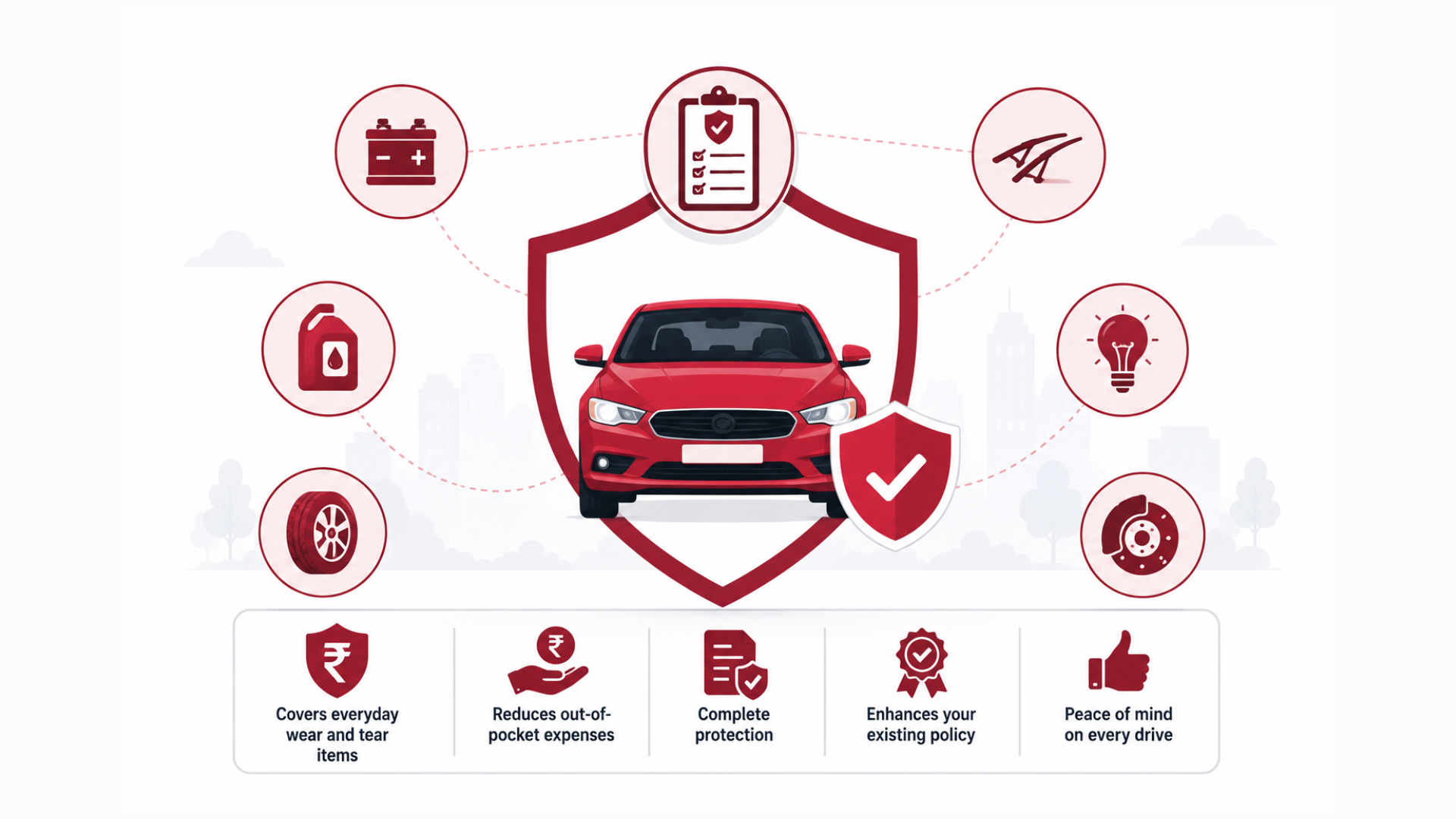
You've just purchased your dream car. You maintain it religiously—regular washing, polishing, timely servicing.
Yet when the engine oil needs changing, the brake fluid requires replacement, or the air conditioner gas needs refilling, you face an unexpected bill of ₹5,000-₹10,000. Your comprehensive car insurance doesn't cover these costs. Your motor insurance focuses on accident damage. So who pays?
This is where most car owners realize they're missing a crucial piece of protection: the consumables add-on cover. It's one of the most overlooked yet valuable add-ons to your car insurance policy. Let's explore why this cover is so important and why every car owner should have it.
Consumables cover protects you from unexpected maintenance costs not covered by basic comprehensive car insurance
Regular car maintenance (oil, filters, lubricants) can cost ₹3,000-₹15,000 annually, making consumables cover essential
While motor insurance is mandatory, consumables add-on coverage is optional but highly recommended for car owners
Consumables cover is affordable—typically ₹500-₹2,000 annually—but can save you ₹50,000+ over a vehicle's lifetime
Your comprehensive car insurance policy does not automatically include consumables coverage; you must purchase it separately
Personal accident insurance within your car insurance policy protects passengers; consumables cover protects your vehicle
Cashless claims through network garages make maintenance hassle-free under consumables cover
Adding consumables to your motor insurance renewal keeps you protected year after year
In the context of car insurance, consumables refer to vehicle components that wear out quickly and cannot be repaired—they must be completely replaced. Unlike structural parts of your car that might last 10-15 years with proper maintenance, consumables have a limited lifespan of weeks to months.
Common examples of car consumables include:
These components are essential for your vehicle's smooth operation, but they're constantly depleting and need replacement throughout your car's lifecycle.
Here's where confusion often arises. When you purchase motor insurance, whether it's basic third-party coverage or comprehensive car insurance, the policy focuses on:
What motor insurance doesn't cover are routine maintenance expenses for consumables. These are considered normal wear-and-tear, preventive maintenance costs—not "accidental" damage. Since standard comprehensive car insurance doesn't include consumables replacement, you need a separate add-on cover.
The consumables add-on cover in your car insurance policy is designed to reimburse you for the cost of replacing the components mentioned above. Here's exactly what's covered:
Engine and Transmission Maintenance:
Brake System Components:
Cooling System:
Filters and Air Quality:
Lubricants and Greases:
Minor Components:
To help you understand exactly why you need consumables cover alongside your comprehensive car insurance, here's a detailed comparison:
| Coverage Aspect | Comprehensive Car Insurance | Consumables Add-On Cover |
|---|---|---|
| Purpose | Covers accident damage, theft, natural calamities | Covers routine maintenance component replacement |
| Type of Damage | Structural damage, major repairs | Normal wear-and-tear, routine replacements |
| Oil & Fluid Replacement | ❌ Not Covered | ✅ Fully Covered |
| Brake Pads/Rotors | ❌ Not Covered (if normal wear) | ✅ Covered |
| Air Con Gas Refill | ❌ Not Covered | ✅ Covered |
| Filter Replacement | ❌ Not Covered | ✅ Covered |
| Spark Plugs & Wires | ❌ Not Covered | ✅ Covered |
| Accident-Related Damage | ✅ Fully Covered | ❌ Not Applicable |
| Theft Protection | ✅ Covered | ❌ Not Applicable |
| Personal Accident Insurance | ✅ Usually Included | ❌ Not Included |
| Natural Calamity Damage | ✅ Covered | ❌ Not Applicable |
| Annual Premium (Approx.) | ₹5,000–₹15,000 (depending on car value) | ₹500–₹2,000 |
| Mandatory? | ❌ No (but recommended) | ❌ No (optional add-on) |
| Claim Process | File after accident or damage | File for maintenance expenses |
| Waiting Period | 30–90 days for pre-existing damage | Usually None |
What This Means: Your comprehensive car insurance and consumables cover work together. One protects against accident damage; the other protects against maintenance costs.
Let's put this in perspective with real numbers. Consider a mid-range car (₹8-12 lakhs) over 5 years:
Annual Consumables Maintenance Without Cover:
Annual Total: ₹18,000 5-Year Total: ₹90,000
With Consumables Add-On Cover:
Net Savings Over 5 Years: ₹82,500 to ₹92,500
Even if you only claim half of your annual maintenance expenses, you're still saving significantly. This is why consumables cover is one of the best value add-ons to your motor insurance policy.
Beyond regular maintenance, consumables cover protects you when multiple components fail simultaneously—which is exactly when costs spiral:
Scenario: Your car's air conditioning system fails during summer. The compressor needs new oil, coolant needs to be replaced, and the entire gas charge is depleted.
Without consumables cover: ₹8,000-₹12,000 out of pocket With consumables cover: ₹0 out of pocket (covered under your add-on)
This is when car owners realize the value of having consumables cover as part of their comprehensive car insurance package.
When you have consumables cover as part of your car insurance policy, you don't have to stress over maintenance bills. You know that:
A well-maintained car with complete service records commands a better resale value. With consumables cover encouraging regular maintenance, your car stays in excellent condition, directly benefiting your resale prospects.
Before you purchase consumables cover as part of your motor insurance, it's crucial to understand its limitations:
Administrative and Legal Fines:
Fuel and Energy Costs:
Structural and Mechanical Repairs:
Electrical System Issues:
User Negligence:
Late Claim Intimation:
Pre-existing Conditions:
Step 1: Immediate Intimation As soon as you require consumables replacement or maintenance, notify your insurance company. Delays in intimation can lead to claim rejection. Most insurers allow a 7-15 day window to report the need.
Step 2: Document Everything Provide your insurer with:
Step 3: Choose Your Claim Method You have two options:
Option A: Cashless Claim
Option B: Reimbursement Claim
Step 4: Settlement and Approval
Step 5: Follow-Up
Be aware of these common pitfalls:
It's important not to confuse consumables cover with personal accident insurance in your car insurance policy:
Personal Accident Insurance:
Consumables Add-On Cover:
You need both: Personal accident insurance ensures you and your family are protected if there's an accident. Consumables cover ensures your car is protected from maintenance costs. Together, they provide comprehensive protection.
Consumables covers are offered with different sum insured amounts. Here's how to choose:
| Car Value | Recommended Consumables Cover | Annual Cost | Best For |
|---|---|---|---|
| ₹2–5 Lakhs (Budget Cars) | ₹50,000–₹75,000 | ₹500–₹1,000 | Economy, Hatchbacks |
| ₹5–10 Lakhs (Mid-Range) | ₹75,000–₹1,00,000 | ₹1,000–₹1,500 | Sedans, SUVs |
| ₹10–20 Lakhs (Premium) | ₹1,00,000–₹1,50,000 | ₹1,500–₹2,000 | Premium cars |
| ₹20+ Lakhs (Luxury) | ₹1,50,000–₹2,00,000 | ₹2,000–₹3,000 | Luxury vehicles |
General Recommendation: Choose a coverage limit of 0.5-1% of your car's value. This ensures you're adequately protected without overpaying.
Many car owners don't add consumables cover when they first purchase motor insurance, but they often add it at renewal. Here's what happens:
At First Purchase (Year 1):
At Year 2-3 Renewal:
Better Approach: Add consumables cover from day one. Over 5 years, the cumulative savings far exceed the premium paid.
When your car insurance renewal date approaches:
No, consumables cover is optional. However, while comprehensive car insurance is legally mandatory (at least third-party coverage), consumables cover is highly recommended for protection against maintenance costs.
No, accident damage is covered by your comprehensive car insurance, not consumables cover. Consumables cover is strictly for maintenance component replacement due to wear-and-tear.
In most policies, yes—but only if the brake pads are worn out due to normal usage, not due to accident damage. Check your specific policy terms.
Typically ₹500-₹2,500 annually, depending on your car's value and the coverage limit you choose. This is a nominal cost compared to potential maintenance expenses.
Yes, you can file multiple claims as long as you have coverage remaining under your policy limit. Each claim is processed separately.

Paybima Team
Paybima is an Indian insurance aggregator on a mission to make insurance simple for people. Paybima is the Digital arm of the already established and trusted Mahindra Insurance Brokers Ltd., a reputed name in the insurance broking industry with 21 years of experience. Paybima promises you the easy-to-access online platform to buy insurance policies, and also extend their unrelented assistance with all your policy related queries and services.
You've just purchased your dream car. You maintain it religiously—regular washing, polishing, timely servicing.


In today's uncertain world, a critical illness can drain your savings quickly. This guide explains the best critical illness insurance options, their benefits, and how they complement your best health insurance for complete protection.
Car ownership brings freedom but also the need for proper protection. This easy guide explains affordable car insurance options in India in 2026. Learn about cheap plans from popular companies, how to renew online, government rules, and practical tips to keep costs low while staying fully protected.
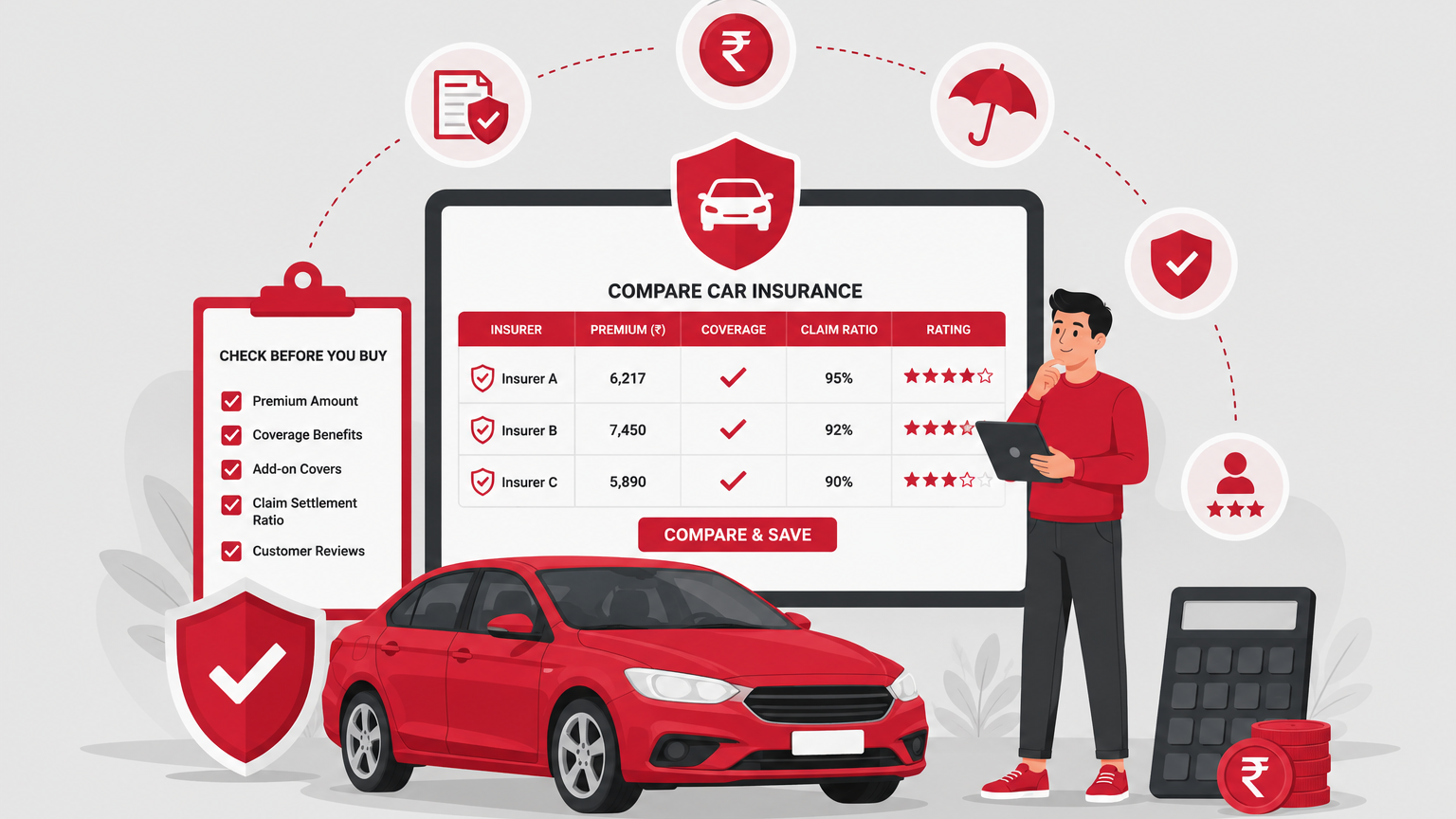
Discover a straightforward guide to comparing car insurance online in India. Perfect for busy drivers aged 25-55, this post covers renewal options, key factors, latest stats, and expert advice to protect your vehicle affordably.

You're 42 years old. You climb the same stairs you climbed for years, but suddenly you feel more winded.

By clicking the button, I authorize Paybima advisor to contact me via SMS, Email, Phone, WhatsApp or any other modes overriding my 'DND'.T&C Apply.
By clicking the button, I authorize Paybima advisor to contact me via SMS, Email, Phone, WhatsApp or any other modes overriding my 'DND'.T&C Apply.

 Car Insurance
