


Related Articles
.png)
 Jan 08, 2025
Is Varicose Vein surgery covered under the health insurance policy in India
 Health Insurance
.png)

.png)
Discover everything about Family Floater Plans in 2026. Get complete details on latest IRDAI rules, benefits, premium comparison, super top-up plans, claim settlement ratio, and smart tips to choose the best health insurance for family. Ideal for people aged 25-55.
Family floater plans offer shared, affordable coverage ideal for the 25-55 age group.
IRDAI 2026 rules have reduced waiting periods, removed age barriers, and capped senior premium hikes.
Combine base floater with super top up health plan for better value.
Check claim settlement ratio, network hospitals, and restoration benefits before buying.
Renew on time and port if needed for better terms.
Always declare health conditions honestly for smooth claims.
A family floater plan is a single health insurance policy that covers your entire family under one shared sum insured. Instead of buying separate policies, one common coverage amount is available for medical expenses of any family member. For people aged 25 to 55 — who are often raising children while caring for aging parents — this plan brings simplicity, better value, and strong financial protection.
In 2026, with rising hospital costs (medical inflation around 11-12% annually), a good family floater has become essential for most middle-class families.
Family floater plans are cost-effective compared to buying separate individual health insurance policies for each member. You pay one premium for coverage that floats across family members. This shared sum insured works well for most middle-class families where not everyone falls ill at the same time.
Lower overall premium than multiple individual plans.
Easy management with one policy document and renewal date.
Coverage for spouse, children, and sometimes parents.
Tax benefits under Section 80D of the Income Tax Act.
Access to cashless treatment in a wide network of hospitals.
With IRDAI’s 2026 updates, these plans are more inclusive. There is no upper age limit for buying health insurance, making it easier to add senior family members. The waiting period for pre-existing diseases (PED) has been reduced to 3 years in many policies. Insurers must also cover severe illnesses without outright rejection.
Health insurance for senior citizen parents can sometimes be added to a floater, though many experts recommend a separate senior plan or super top up health plan for higher coverage at lower cost once they cross 60-65 years.
Family floater plans help families manage healthcare costs effectively. Healthcare expenses have increased significantly, but these plans allow you to get wide coverage at a reasonable premium. They cover hospitalization, day-care treatments, pre- and post-hospitalization expenses (usually 30 and 60 days), ambulance charges, and many modern treatments.
Many plans now also offer wellness benefits, annual health check-ups, telemedicine, and coverage for AYUSH treatments, making them more complete than before.
Cost-effective: One premium covers multiple members — usually much cheaper than multiple individual health insurance policies.
Easy to manage: Single policy document, one renewal date, and simple tracking.
Flexible coverage: Any member can use the full sum insured when needed.
Tax benefits: Deduction under Section 80D up to ₹25,000 (or ₹50,000 for senior citizens).
Cashless treatment: Access to thousands of network hospitals across India.
No-claim bonus: Many insurers increase sum insured for claim-free years.
| Feature | Family Floater Plan | Individual Health Insurance |
|---|---|---|
| Coverage Type | Shared sum insured for entire family | Separate sum insured for each person |
| Premium Cost | Lower for the whole family | Higher when buying multiple policies |
| Best Suited For | Young to middle-aged families (25-55 age group) | Individuals with unique high health risks |
| Claim Impact | One big claim reduces balance for others | Claims do not affect other policies |
| Management | Very easy — one policy | Multiple policies to track |
The Insurance Regulatory and Development Authority of India (IRDAI) introduced major customer-friendly changes in 2025-2026:
No upper age limit: You can buy or renew health insurance at any age.
Shorter waiting period: Pre-existing disease (PED) waiting period is now maximum 3 years (reduced from 4 years). This is very helpful for families with diabetes, hypertension, or other common conditions.
Senior citizen protection: Premium increases for seniors (60+) are capped. Insurers cannot reject proposals just because of severe illnesses like cancer or heart disease.
Faster claims: Improved rules for quicker pre-authorization and claim settlement. Delays attract penalties for insurers.
Better portability: Easy to switch insurers without losing benefits.
Standardization: Clear definitions and uniform rules across companies for better transparency.
These updates make a mediclaim policy for family more reliable and accessible than ever before.
Focus on these important factors while selecting your plan:
Claim Settlement Ratio (CSR): Choose companies with consistently high claim settlement ratio (ideally above 95-99%). Top performers in recent IRDAI data include New India Assurance, Acko, Star Health, and HDFC Ergo.
Adequate Sum Insured: For a family of 4 in 2026, ₹15 lakhs to ₹50 lakhs is recommended considering current hospital bills.
Restoration / Refill Benefit: Sum insured gets refilled if exhausted during the year.
Network Hospitals: Check for good hospitals near your home and in other cities.
Additional Benefits: Coverage for consumables, room rent (no sub-limit), modern treatments, maternity, and newborn care.
Many smart families buy a base family floater with ₹10-20 lakhs sum insured and add a super top up health plan for ₹50 lakhs or ₹1 crore coverage. The super top-up activates only after a deductible (e.g., ₹5-10 lakhs) and costs much less. This combination gives high protection at an affordable premium.
| Sum Insured | Family Type | Estimated Annual Premium |
|---|---|---|
| ₹10 Lakhs | 2 Adults + 2 Children | ₹18,000 – ₹28,000 |
| ₹20 Lakhs | 2 Adults + 2 Children | ₹25,000 – ₹40,000 |
| ₹50 Lakhs | 2 Adults + 2 Children | ₹40,000 – ₹65,000 |
*Note: Premiums vary by age, city, and health conditions. Always get personalized quotes.*
You can include parents in your health insurance for family floater. However, after age 60-65, adding them often increases the overall premium sharply. In such cases, many families prefer keeping parents in a dedicated health insurance for senior citizen plan or a separate super top up health plan. This helps control costs while giving better-tailored coverage for age-related needs.
A family floater plan is a single health insurance policy that covers the entire family under one shared sum insured. Any family member can use the coverage when needed.
In a family floater, one sum insured is shared among all members — while individual plans give separate sum insured for each person. This sharing can be more economical, but you need a higher overall sum insured to make sure one big claim doesn’t exhaust the family’s entire coverage.
IRDAI has reduced the pre-existing disease waiting period to 3 years, removed the upper age limit, capped premium hikes for senior citizens, and made claim settlement faster.
For most families in the 25-55 age group, a family floater is more cost-effective and convenient. However, individual plans may suit people with specific high health risks.
Very important. Always choose insurers with a high claim settlement ratio (above 95%). It shows how reliably the company pays claims.
For a family of 4, ₹15 lakhs to ₹50 lakhs is generally recommended considering today’s hospital costs. You can always increase it later.
Buy it as early as possible. Renew on time every year and review the policy annually. You can also port to another insurer if you find better benefits.
Young and healthy? Find out which of these plans rewards you with lower premiums. Click here to check now!

Paybima Team
Paybima is an Indian insurance aggregator on a mission to make insurance simple for people. Paybima is the Digital arm of the already established and trusted Mahindra Insurance Brokers Ltd., a reputed name in the insurance broking industry with 21 years of experience. Paybima promises you the easy-to-access online platform to buy insurance policies, and also extend their unrelented assistance with all your policy related queries and services.

 Jan 08, 2025
Health Insurance
Jan 08, 2025
Health Insurance

Explore everything about the All-India National Permit in 2026. This detailed guide helps truck owners, fleet operators, and transporters understand fees, types, application steps, government rules, and tips to stay compliant while saving time and money on interstate logistics.

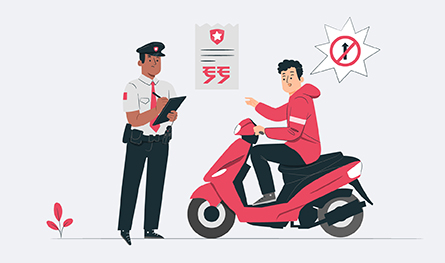
Driving on the wrong side of the road is dangerous as it causes the risk of accidents. India’s road traffic rules strictly prohibit people from driving their bikes on the wrong side of the road. However, many bikers continue doing the same. Hence, to avoid accidents on the road due to wrong-side driving, the government has imposed strict action against defaulters.
.png)
A detailed, easy-to-understand breakdown of the latest Maharashtra Highway Police road safety report. Learn about the rising accident statistics, key causes like overspeeding, new 2026 traffic updates, and how to stay financially secure using the right vehicle and personal accident insurance.
.jpg)
Ebola continues to remain one of the world’s most dangerous infectious diseases in 2026. Even though healthcare systems across the globe have improved over the years, Ebola outbreaks still create fear because the virus can spread quickly, cause severe illness, and lead to high death rates if not controlled early.
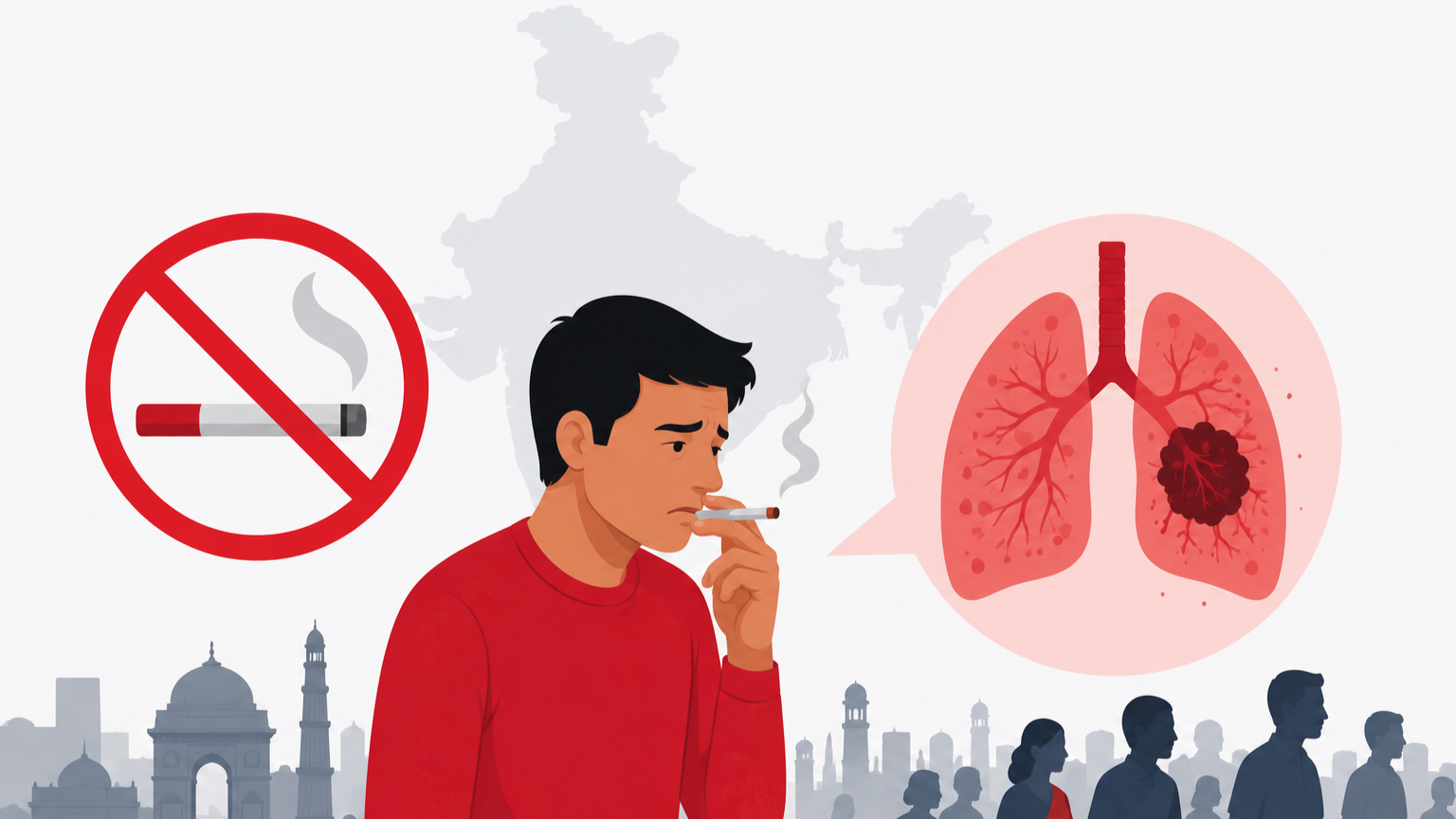
Oral cancer remains one of the most common cancers in India, largely fueled by tobacco use and growing HPV infections. This guide explains the risks in simple terms, latest 2026 statistics, prevention steps, and how medical insurance policies can help manage treatment costs for individuals and families.

By clicking the button, I authorize Paybima advisor to contact me via SMS, Email, Phone, WhatsApp or any other modes overriding my 'DND'.T&C Apply.
By clicking the button, I authorize Paybima advisor to contact me via SMS, Email, Phone, WhatsApp or any other modes overriding my 'DND'.T&C Apply.

