
Government Launches $1.5 Billion Insurance Cover for Indian Vessels
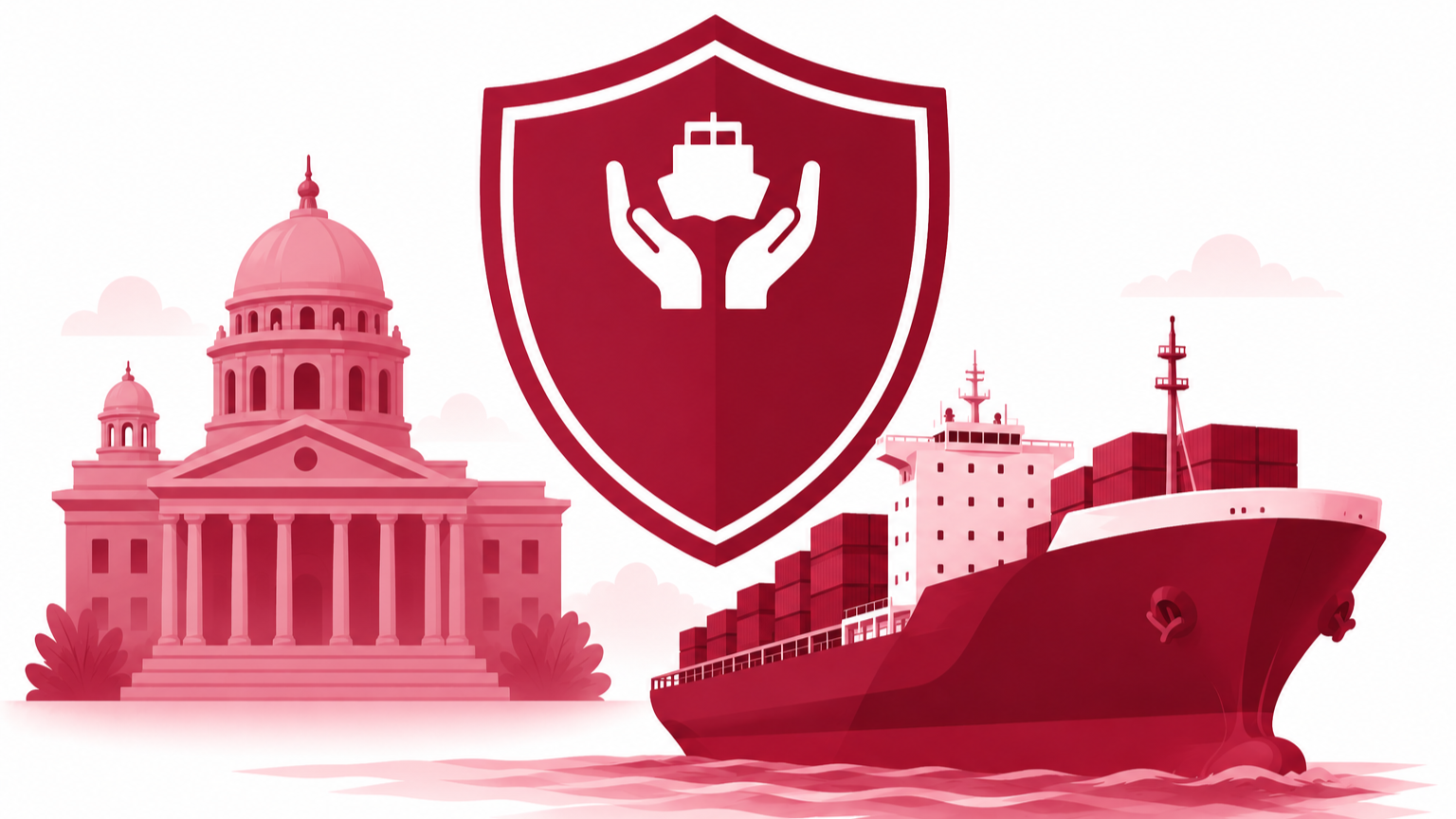
India has taken a significant step toward strengthening maritime security and protecting shipping interests by launching a $1.5 billion insurance scheme for Indian vessels.
The initiative aims to provide financial protection for ships operating in high-risk waters, especially amid rising geopolitical tensions and security concerns in global shipping routes.
With global trade heavily dependent on maritime transport, disruptions due to war risks, piracy, or regional conflicts can severely impact shipping companies and cargo owners. This new government-backed insurance initiative is designed to ensure that Indian ships continue operating safely without facing prohibitive insurance costs.
Key Takeaways
-
The Indian government has introduced a $1.5 billion insurance cover for Indian vessels operating in risky maritime zones.
-
The initiative helps ship owners manage war-risk insurance costs that have surged due to global conflicts.
-
The scheme protects vessels against risks such as war, piracy, and geopolitical tensions.
-
It ensures smoother maritime trade by reducing financial uncertainty for shipping companies.
-
The move indirectly benefits global trade supply chains that depend on Indian shipping routes.
Why the Government Introduced the Insurance Scheme
Recent geopolitical conflicts and instability in major shipping corridors have significantly increased war-risk premiums for vessels. Shipping companies operating near conflict zones must often pay extremely high insurance charges, which can disrupt trade.
To address this challenge, the government introduced a $1.5 billion insurance cover for Indian vessels. The program ensures that Indian shipping companies can continue their operations even in sensitive regions without facing unsustainable insurance costs.
This initiative is similar to risk-pooling arrangements where governments step in to support industries affected by global uncertainties. By providing this safety net, India aims to maintain the continuity of maritime trade and protect national shipping interests.
What the Insurance Scheme Covers
The insurance program is designed to protect ships against extraordinary risks that are not typically included in standard policies.
This type of protection is particularly important for ships traveling through regions like the Red Sea, Gulf of Aden, and other sensitive maritime zones.
Impact on Shipping Companies
For shipping companies insurance premiums can significantly influence operational costs. When global conflicts escalate, insurers often increase war-risk premiums dramatically.
The new government-backed insurance scheme helps reduce this burden by providing additional coverage support.
Shipping companies will benefit in several ways:
1.Lower Financial Risk
With government-backed protection, ship owners will face less financial exposure if a vessel is damaged or attacked.
2.Stable Trade Operations
The scheme ensures that Indian ships can continue operating in international waters without disruptions caused by skyrocketing insurance premiums.
3.Confidence for Global Trade
Global cargo owners and traders gain confidence when vessels have strong insurance backing, ensuring goods are transported securely.
How This Affects Travel Insurance and Shipping Claims
Although the scheme primarily focuses on maritime vessels, it indirectly impacts the broader insurance ecosystem, including travel insurance and travel insurance claim processes.
For example:
-
Crew members working on ships often rely on travel insurance policies while traveling internationally.
-
In the event of maritime incidents, crew members may file travel insurance claim requests for medical treatment, evacuation, or accidental coverage.
-
Strong vessel insurance protection reduces the likelihood of disputes and complications during insurance claims.
Thus, a stronger maritime insurance framework contributes to a more reliable insurance environment overall.
Benefits of the Maritime Insurance Initiative
Why Maritime Insurance is Critical for Global Trade
More than 80% of global trade by volume moves through maritime routes. When shipping lanes become unsafe due to conflict or piracy, the entire supply chain can suffer.
Insurance plays a critical role in protecting:
-
Ships
-
Cargo
-
Crew members
-
Trade investments
Without strong insurance support, shipping companies might avoid certain routes altogether, causing delays and increasing costs for businesses and consumers worldwide.
Government’s Strategy for Maritime Security
The insurance scheme is part of a broader strategy to strengthen India’s maritime capabilities. The government has been focusing on:
-
Expanding shipping infrastructure
-
Supporting Indian shipping companies
-
Improving maritime security
-
Enhancing global trade competitiveness
By introducing this insurance program, India aims to reduce the impact of global conflicts on its shipping sector.
What It Means for the Future of Indian Shipping
The introduction of a $1.5 billion insurance cover for vessels highlights India’s commitment to supporting its maritime industry.
This initiative is expected to:
-
Encourage more ships to operate under the Indian flag
-
Provide financial stability to shipping companies
-
Protect maritime trade routes vital for economic growth
As global trade continues to evolve, such government-backed insurance programs may become increasingly important for safeguarding international commerce.
Sources
-
Times of India – Maritime Insurance Coverage News
-
Government Shipping and Maritime Policy Updates
-
Industry reports on global shipping insurance and war-risk coverage
It is a government-backed insurance initiative designed to protect Indian ships operating in high-risk maritime zones from war, piracy, and geopolitical risks.
The program was introduced to help shipping companies manage rising war-risk insurance premiums caused by global conflicts and maritime security threats.
Yes, the insurance scheme includes coverage for piracy attacks, terrorism risks, and other security threats affecting maritime operations.
Crew members working on ships often rely on travel insurance for international travel. In case of accidents or medical emergencies, they may file a travel insurance claim for assistance.
While it may not directly reduce operational costs, it helps stabilize insurance premiums and prevents sudden spikes caused by geopolitical risks.

Author Bio
Paybima Team
Paybima is an Indian insurance aggregator on a mission to make insurance simple for people. Paybima is the Digital arm of the already established and trusted Mahindra Insurance Brokers Ltd., a reputed name in the insurance broking industry with 21 years of experience. Paybima promises you the easy-to-access online platform to buy insurance policies, and also extend their unrelented assistance with all your policy related queries and services.


Latest Post


Buying a car doesn't always mean breaking the bank. If you're looking for an affordable vehicle that doesn't compromise on quality or reliability, 2026 is a great year to make your purchase.

Statins are among the most commonly prescribed medications worldwide for reducing cholesterol and preventing serious cardiovascular diseases such as heart attacks and strokes.

Explore everything about the All-India National Permit in 2026. This detailed guide helps truck owners, fleet operators, and transporters understand fees, types, application steps, government rules, and tips to stay compliant while saving time and money on interstate logistics.

Commercial vehicles are the backbone of India's transportation and logistics industry. From trucks carrying goods across states to taxis, buses, school vans, ambulances, auto-rickshaws, and delivery vehicles serving daily commuters and businesses, these vehicles play a vital role in the country's economy.


Speak to our Advisor
+91

By clicking the button, I authorize Paybima advisor to contact me via SMS, Email, Phone, WhatsApp or any other modes overriding my 'DND'.T&C Apply.